







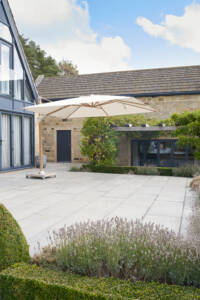
There’s a reason cantilever parasols have become the go-to choice for discerning garden owners. Unlike traditional centre-pole parasols, a free-arm design puts you in complete control, shade exactly where you need it, with nothing in the way of your furniture, your view, or your guests.
Whether you’re newly considering a cantilever parasol or already enjoying one, this guide covers everything you need to know to get the most from your investment.
Why Choose a Cantilever Parasol?
The defining feature of a cantilever parasol is its offset pole — the arm extends out over your seating area rather than running through the middle of it. This means:
No awkward pole through your table. You can arrange your furniture however you like, and move your sun loungers or dining chairs without working around a fixed central post.
Precise, flexible shade. With a double tilt system and full rotational movement, you can follow the sun throughout the day — or angle the canopy to block low evening light without moving an inch.
A cleaner, more contemporary look. The sweeping arm of a cantilever parasol has an architectural quality that elevates any outdoor space. It looks intentional, not just functional.
Choosing the Right Size
Getting the size right is one of the most important decisions you’ll make. As a general rule, your parasol canopy should extend at least 50cm beyond the edge of your seating area on all sides to provide meaningful shade.
For a dining table for 4–6 people, a 3m square or a 3.5 x 2.6m rectangular canopy is typically ideal. The rectangular shape works particularly well for longer tables.
For sun loungers or a large corner sofa, consider a 3m square as a minimum, or look at larger formats if you have a generous terrace.
For a compact bistro area or two chairs, a 2.7m square provides excellent coverage without overwhelming the space.
Don’t be tempted to go too small — a parasol that doesn’t quite reach provides patchy shade and can look out of proportion. When in doubt, size up. Browse our full cantilever parasol collection to find the right fit for your space.
Picking Your Canopy Colour
Your canopy colour does more than you might think. It affects not just the look of your garden, but the quality of shade beneath it.
Champagne and Sandstone tones create a warm, golden light beneath the canopy — flattering for skin tones and ideal for alfresco dining. They also complement natural materials like teak and stone beautifully.
Anthracite, Faded Black and Manhattan Grey give a contemporary, architectural feel and tend to hold their colour well over time. The darker tones absorb more heat on top but can feel cooler underneath as they block more direct light.
Lush Green and Havana Taupe sit beautifully in garden settings, blending with planting and natural surroundings rather than competing with them.
All Field & Hawken canopies are crafted from UV-resistant, weather-treated fabric, so whichever colour you choose, it’s designed to retain its vibrancy season after season.
The Base: Don’t Overlook It
A cantilever parasol places significant lateral load on its base — far more than a centre-pole design. This is not a place to cut corners.
We strongly recommend the Granite 90KG Wheeled Parasol Base for all our cantilever parasols. At 90kg, it provides the ballast needed to keep your parasol stable even in a breeze, while the integrated wheels mean you can reposition it without any heavy lifting.
Never use a cantilever parasol without an appropriately weighted base, and always close and secure the canopy when the parasol is unattended or when wind picks up. Browse our full range of parasol bases to find the right match for your parasol.
Getting the Most from Your LED Lighting
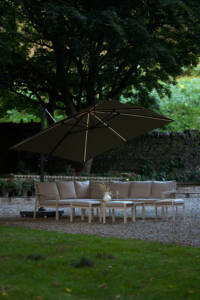
If your parasol features integrated warm white LED lighting in the ribs — as found on our Challenger Teak T2 and Glow Challenger T2 ranges — you’re able to extend your outdoor entertaining well into the evening.
A few tips for making the most of it:
- Use the LED setting on lower-light evenings rather than waiting until it’s completely dark — the transition from natural to artificial light is much more atmospheric that way.
- The warm white tone pairs beautifully with candles or lanterns on the table below.
- Always switch off the LEDs before closing the parasol for the night.
Cantilever Parasols in Commercial Settings
Cantilever parasols aren’t just for private gardens — they’re one of the smartest investments a hospitality or commercial business can make in its outdoor space.
For restaurants, gastropubs, hotels and cafés, outdoor seating is revenue-generating space. Every table that’s shaded and comfortable on a sunny day — or sheltered from a light shower — is a table that’s earning. A well-specified cantilever parasol can effectively extend your trading season by weeks, turning what might otherwise be dead days in early spring or late autumn into productive covers.
Why cantilever works so well commercially:
- No pole through the table means maximum seating capacity and a better guest experience — no one is wedged awkwardly around a central post.
- One parasol can shade multiple tables when positioned correctly, making it a highly efficient use of capital versus individual table parasols.
- The premium aesthetic communicates quality to guests before they’ve even sat down. In a competitive hospitality market, the visual impression of your outdoor space matters enormously.
- Integrated LED lighting on our Glow and Challenger Teak ranges means evening service is fully supported — no need for additional lighting infrastructure over the terrace.
- Robust construction — powder-coated aluminium frames and UV-resistant canopy fabrics — means these parasols are built to withstand daily commercial use, not just occasional weekend entertaining.
Cantilever parasols as a long-term investment:
A quality cantilever parasol should be viewed not as a seasonal accessory, but as a durable asset — for both domestic and commercial settings. Compared to the cost of a pergola, awning, or fixed shade structure, a freestanding cantilever parasol offers significant advantages: it requires no planning permission, no permanent installation, and can be repositioned or replaced independently if your needs change.
With proper maintenance and winter storage using a purpose-made parasol cover, a well-made cantilever parasol will provide many years of reliable service. The initial investment is repaid many times over in extended outdoor use, increased comfort, and — in commercial settings — additional revenue from a space that would otherwise sit empty on hot or unpredictable days.
Maintenance: Keeping Your Parasol in Perfect Condition
A well-maintained cantilever parasol will reward you for many years. Here’s what we recommend:
During the Season
Clean the canopy regularly. Brush off loose debris with a soft brush, then wipe down with a mild soapy solution and a soft cloth. Rinse thoroughly with clean water and allow to dry fully before closing — this prevents mildew from forming in the folds.
Check the mechanism. Periodically operate the tilt and rotation functions to ensure they’re moving freely. If anything feels stiff, a small amount of silicone spray on the pivot points will keep things running smoothly. Avoid WD-40 or oil-based lubricants as these can attract dirt.
Inspect the frame. Check the powder-coated aluminium frame for any chips or scratches. Touch these up promptly with a matching paint pen to prevent any corrosion from taking hold.
Wipe down the pole and arm. A damp cloth is all that’s needed. For stubborn marks, a mild household cleaner works well — just avoid anything abrasive.
End of Season Storage
Always store with a cover. Our parasol covers are purpose-made for this job — breathable to prevent condensation, waterproof to protect against rain and frost, and shaped to fit snugly without trapping moisture against the fabric.
Store the base separately. If possible, bring the base indoors or into a garage over winter. While granite is extremely durable, prolonged freezing and thawing can cause surface cracking over time.
Clean before you cover. Never put a dirty or damp parasol away for the winter. A thorough clean and a full dry before covering will ensure you open it in spring in exactly the condition you left it.
Loosen the canopy tension slightly before long-term storage to reduce stress on the fabric and the frame joints.
Quick Troubleshooting
The canopy won’t open fully — check that the crank or lever mechanism isn’t obstructed, and that the parasol is on a level surface. Sometimes the canopy needs a gentle hand-assist on first open of the season.
The tilt feels stiff — apply silicone lubricant to the tilt joint and operate it several times to work it in.
There’s a slight wobble — check that all base screws and pole connections are fully tightened. On a new parasol, connections can settle slightly in the first few weeks.
The canopy has a watermark or stain — most marks respond well to a specialist outdoor fabric cleaner. Always test on a small hidden area first.
A Final Word
A cantilever parasol is one of the most transformative additions you can make to an outdoor space — whether that’s a private garden terrace or a busy commercial venue. Done right, it turns an exposed area into a room: somewhere comfortable, considered, and genuinely worth spending time in, whatever the weather.
Take care of it, pair it with the right base, protect it with a quality cover between seasons, and it will reward you for many summers to come.
Browse the full Field & Hawken cantilever parasol collection →